
7 April 2026
Badminton: The “Bullet” that can travel at over 400 km/h
Competitive Badminton is one of the most intense and fastest sports in the world.
It is a frantic dance of explosive sprints, split-second reflexes, and physical endurance that pushes the heart to its limit. If you think it’s a “light” game, consider that here the “bullet”, the shuttlecock, can travel at over 400 km/h.
What it is and how to play: The rules of the game
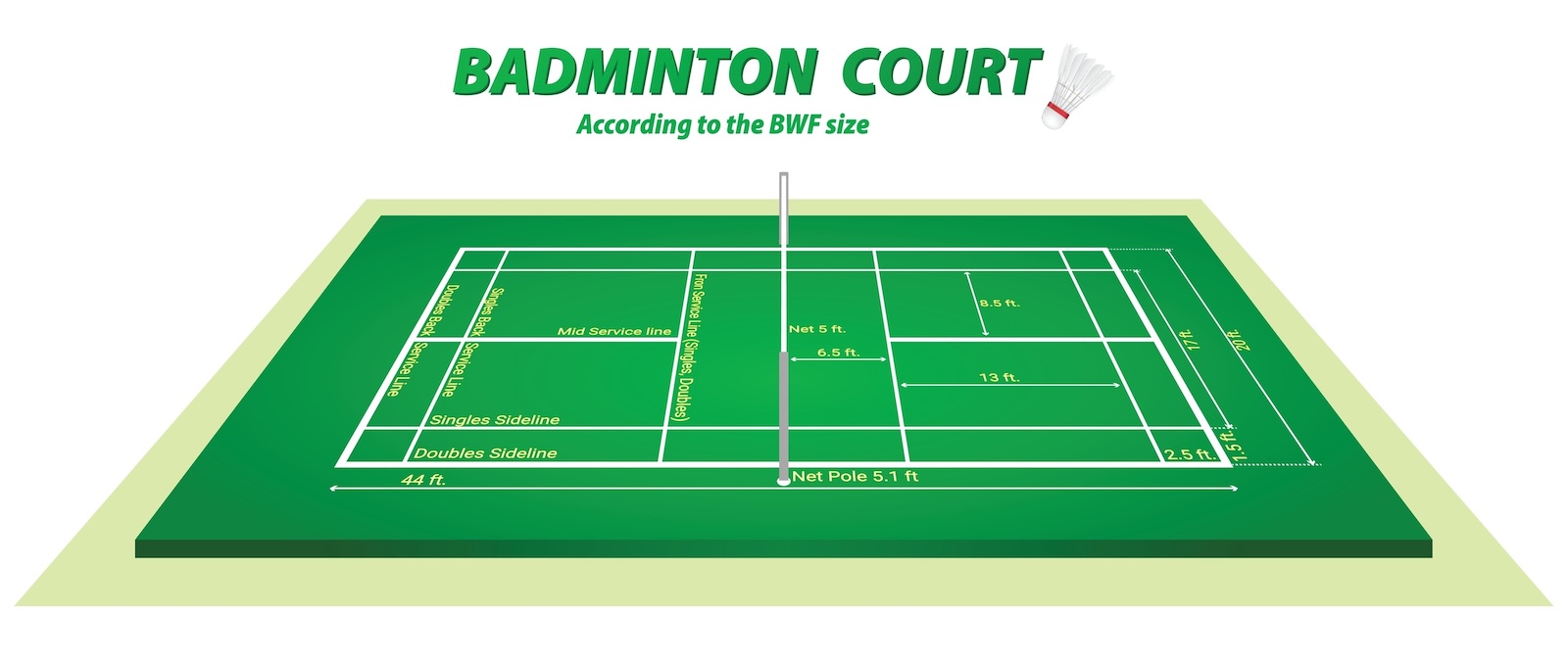
Badminton is played on a rectangular court divided by a net 1.55 metres high. The absolute peculiarity is the shuttlecock (or birdie): a conical object made of 16 feathers (traditionally goose feathers) inserted into a cork base. Unlike tennis, the shuttlecock must never touch the ground; if it drops, the rally is over.
The fundamental rules:
- Scoring: Matches are played as the best-of-three sets to 21 points. Every rally awards a point.
- Speed: It is the fastest racket sport on the planet. The air friction on the feathers creates sudden deceleration, forcing the athlete to change pace in fractions of a second.
- Physical Effort: In a high-level match, a player performs thousands of sprints and leaps.
Origins: From Indian Courts to Gloucestershire
The sport has its roots in ancient India, where it was known as Poona. In the second half of the 19th century, British officers were fascinated by it and brought it back to England.
The modern name derives from Badminton House, the residence of the Duke of Beaufort. During a reception in 1873, the game was officially presented to the English nobility, codifying the first rules that would, decades later, lead it to become a fully-fledged Olympic discipline.
The Story of Lin Dan: The Icon of Badminton
If Futsal has Falcão, Badminton has Lin Dan. Left-handed, charismatic, and technically perfect, the Chinese superstar is considered the greatest of all time. A gold medallist in the singles at both the Beijing 2008 and London 2012 Olympic Games.
Lin Dan was not just an athlete; he was a symbol of competitive ferocity and surgical precision. But his greatness is not measured solely in trophies, but in the respect earned on the court through his historic fair play.
The moment that defined the legend of Lin Dan is his relationship with his eternal rival, Malaysia’s Lee Chong Wei. For over ten years, the two faced off in epic finals, including two consecutive Olympics. Two entire nations would come to a standstill to watch them, yet despite the stifling pressure, their bond remained an unprecedented example of sporting loyalty.
The Shirt Exchange at Rio 2016
The most touching episode occurred at Rio 2016. For years, Lee Chong Wei had been the “eternal second”, defeated by Lin Dan in the finals of 2008 and 2012. Rio was the last call for both, and the semi-final was an epic 79-minute battle that ended with a hard-fought victory for Lee Chong Wei (21-15, 11-21, 22-20).
As the final point ended, with tension thick enough to cut with a knife, there were no wild celebrations or gestures of annoyance. The two met at the net and… locked in a deep embrace, as if to support one another after the superhuman physical effort on the green mat.
Then, they performed a gesture typical of football but extremely rare in top-flight badminton: they took off their shirts and swapped them right there on the court, in front of the world’s cameras.
Why did that moment become legendary?
In that instant, Lin Dan (the man who had won everything) was symbolically handing over the baton to his historic rival, who had finally beaten him on the Olympic stage. Despite having just lost the chance for a third consecutive gold, Lin Dan’s first thought was to honour the man who had forced him to exceed his own limits for over a decade.
It was proof that an opponent is not an enemy, but the necessary mirror to measure one’s own greatness. Without his “nemesis” Lee Chong Wei, Lin Dan would never have become “Super Dan”.
Court Trivia
Did you know that in a badminton match, an athlete runs on average twice as much as a tennis player, even though the court is much smaller? The intensity is such that the heart rate remains constantly above 160 bpm. Furthermore, the precision required is surgical: hitting the shuttlecock with the wrong part of the racket means an instant loss of control over its trajectory.
Sources: Wikipedia (Badminton); Olympics.com; BWF World Tour; Badminton England; FilippoGalli.com.
Last News
News 4 August 2026
EUG 2026: impressive figures for the event that placed Salerno at the heart of Europe for 15 days
It is time to take stock of EUG Salerno 2026, the eighth edition of the European Universities Games, organised – for the first time ever in Italy – through the outstanding joint efforts of the University of Salerno, CUS Salerno and ADISURC, with the support of FederCUSI and the Campania Region.
News 3 August 2026
“Ciao Italia”: the baton passes to Split
The first historic Italian edition of the European Universities Games has come to an end.
News 3 August 2026
Medal haul on the final day of EUG Salerno 2026
On the final day of EUG Salerno 2026, European university titles were awarded in beach volleyball, tennis, football, badminton, 3×3 basketball, and handball.
News 31 July 2026
The games conclude tomorrow with the closing ceremony in Piazza Del Sapere
Tomorrow, August 1, will mark the final day of competition at EUG Salerno 2026.